
Regional species and safety hub · Last reviewed 22 August 2026
Box jellyfish are a serious but incompletely mapped coastal hazard in the Philippines. Fatal envenomations have been reported, yet species identity, local seasonality and systematic monitoring remain uneven. The useful question is not “Is the Philippines dangerous?” It is “What do current authorities and observations say about this beach today?”
Which species occur?
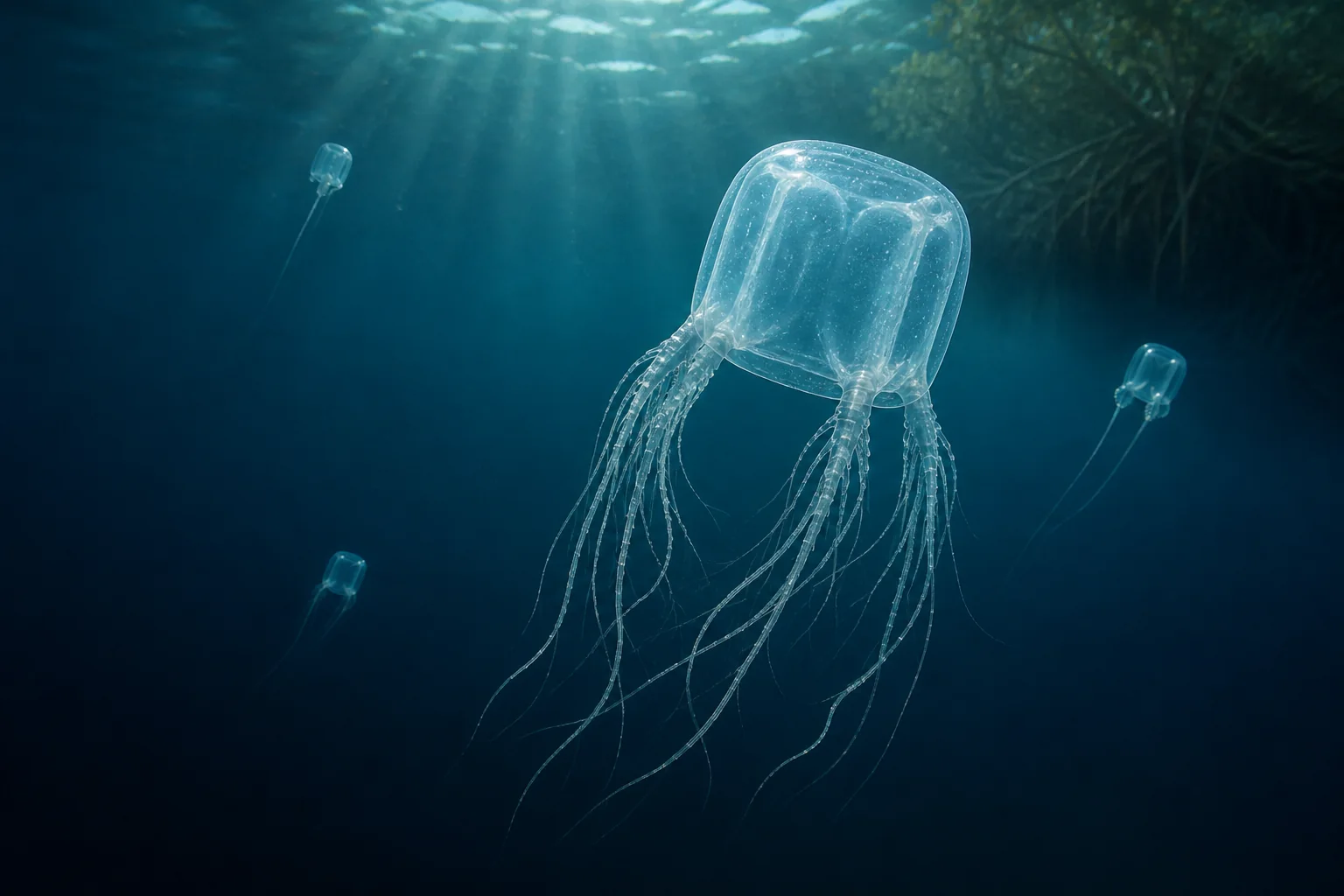
Multi-tentacled Chironex-type box jellyfish occur along Philippine coasts, and recent molecular work has examined animals identified as Chironex yamaguchii from the Philippines and Japan. Other cubozoans are also present. Because the taxonomy is still being revised, a local sighting should not be forced into the Australian name C. fleckeri without evidence.
What early monitoring found
A 2021 Philippine Journal of Science study monitored sites in eastern and western Luzon for three months. Encounters were more likely at sampled beaches near river mouths, around the flood phase of larger tides, under onshore monsoon winds during warmer months and during calm conditions. These are initial patterns from specific sites—not a national prediction model.
Before swimming
- Check recent BFAR, local-government, resort and lifeguard advisories.
- Ask whether a maintained stinger enclosure and trained responders are present.
- Wear full-coverage protective clothing in shallow coastal water where advised.
- Keep children close and away from stranded jellyfish.
- Do not rely on clear water or the absence of a sighting.
Report sightings responsibly
From a safe distance, record location, date, tide stage and photographs of the whole animal. Send them to a relevant BFAR office, local university marine program or museum. Do not collect tentacles or carry a specimen through a public beach.
Frequently asked questions
Is there one Philippine box-jellyfish season?
No national calendar can cover thousands of islands, two monsoon regimes and species with different ecology. Use current local monitoring.
Are only river-mouth beaches affected?
No. Proximity to rivers was one pattern in the studied sites, not a rule that clears other beaches.
Can a stinger suit guarantee safety?
No. It reduces direct skin contact on covered areas. Local closures, managed swimming and emergency readiness remain important.
Sources and review
- Philippine Journal of Science: initial coastline monitoring findings
- BFAR Region 5: box jellyfish advisory
- 2025 genetic study of western Pacific Chironex
Medical content is editorially source-checked; independent clinical review is pending. Official local instructions take precedence.
Review and corrections
See an error or outdated source? Read our corrections process. Safety information is educational and does not replace local emergency services or clinical advice.