
Marine biology · Evidence · Safety
Box jellyfish, explained with evidence.
Understand their remarkable eyes, active hunting, coastal ecology and medical risk through source-backed guides written for swimmers, students and curious readers.
Source hierarchy
Museums, public-health authorities and peer-reviewed research.
Species-specific
Risk, size and behavior are not generalized across Cubozoa.
Transparent standards
Visible sourcing, review dates, uncertainty and corrections.
Start here
The questions readers ask first
Safety
How dangerous are box jellyfish?
Compare risk by species and understand why contact area and response time matter.
Anatomy
How do 24 eyes work?
Explore image-forming eyes, sensory clubs and vision without a central brain.
Ecology
Where do they live?
Separate the habitat of northern Australia’s Chironex from the global cubozoan range.
Suspected serious sting
Leave the water and call emergency services.
If the person is unresponsive and not breathing normally, begin CPR and use an AED if available. First-aid details vary by species and region—follow current local guidance.
Latest guides
Build a clearer picture
-
Box Jellyfish Anatomy: Interactive Labeled Diagram
Explore box jellyfish anatomy with an accessible interactive diagram of the bell, velarium, pedalia, rhopalia, mouth, canals and tentacles.
-
Can You Eat Box Jellyfish? Edible Species, Venom and Safety
Do not catch or eat box jellyfish. Learn which named jellyfish species are commercially processed as food and why species identity and…
-

What to Do If You See a Box Jellyfish
Leave the water, alert local authorities and record a safe, useful sighting without touching the animal or delaying emergency care.
-
Can Box Jellyfish Sting Through Clothing?
Close-fitting fabric reduces tentacle contact, but gaps and exposed skin remain. Learn why coverage, weave, condition and removal technique matter.
-
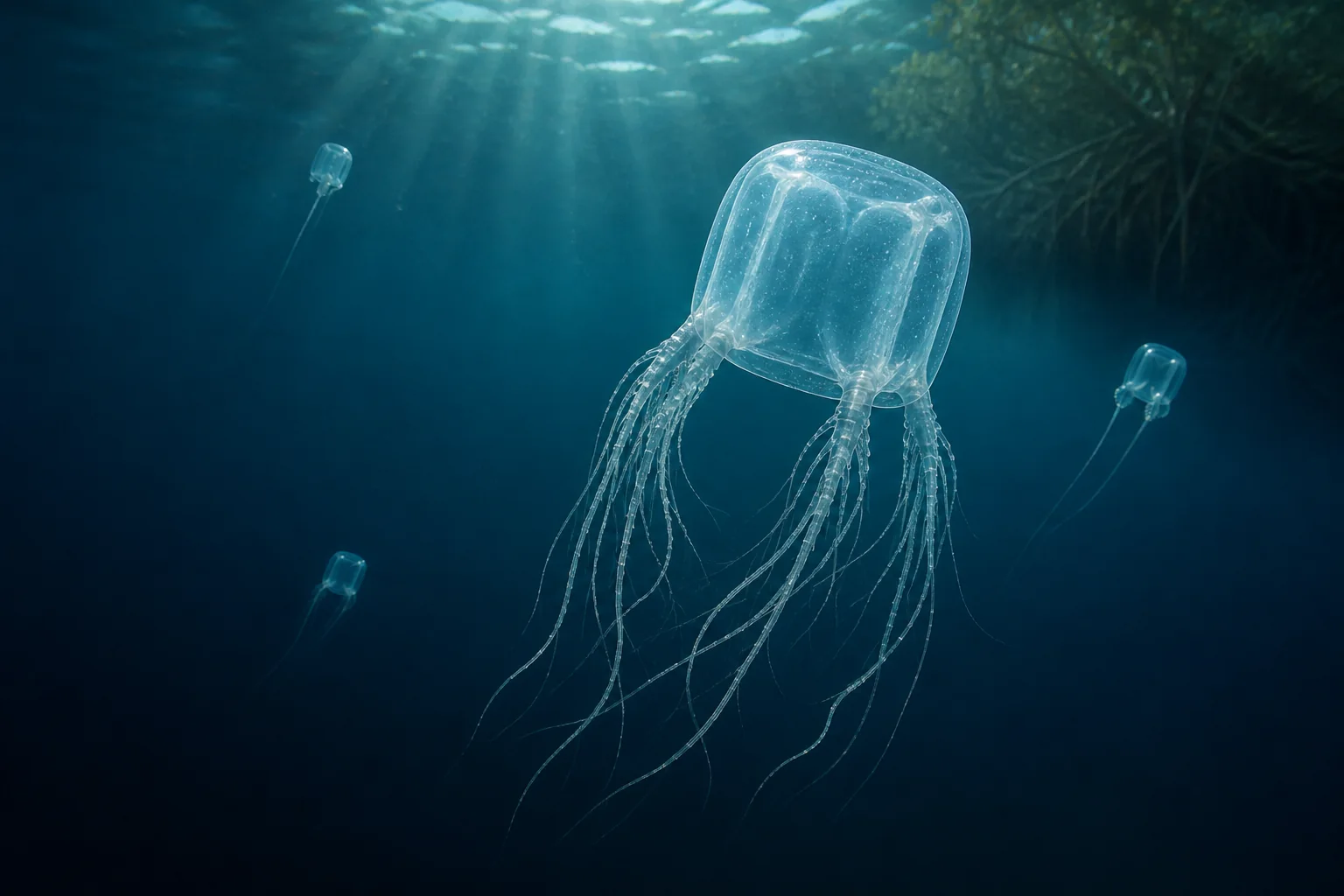
Can Box Jellyfish Live in Fresh Water?
Box jellyfish are marine animals that may enter brackish estuaries, not landlocked fresh water. Learn why river-mouth records cause confusion.
-
Do Box Jellyfish Sleep?
Box jellyfish show activity rhythms and pauses, but scientists have not established human-like sleep. Learn what evidence a sleep claim requires.
Editorial integrity
Authority comes from showing the evidence.
We identify species, distinguish observation from inference, and disclose when independent specialist review is still pending.