
Species profile · Last reviewed 22 August 2026
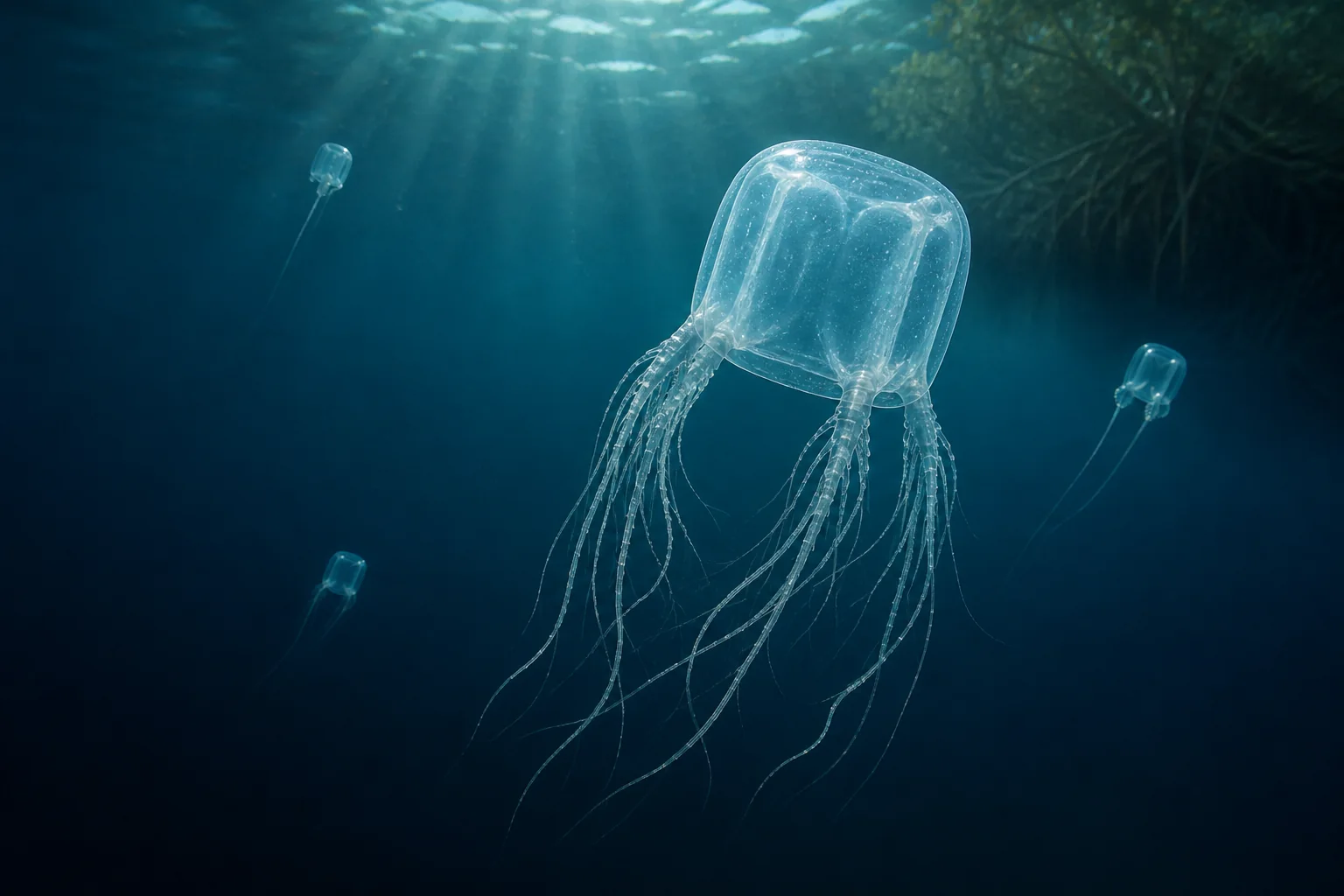
Chiropsalmus quadrumanus is a multi-tentacled box jellyfish of the western Atlantic. It occurs on the opposite side of the world from Australia’s Chironex fleckeri, a reminder that medically significant cubozoans are not confined to the Indo-Pacific.
Appearance
Branching pedalia at the four bell corners carry multiple tentacles, placing the species among the chirodropids. Transparent tissue and variable preservation make expert confirmation important. A common name such as “sea wasp” does not reliably distinguish it from relatives.
Range
Verified records are from warm western Atlantic coastal waters, including parts of the Gulf of Mexico, Caribbean and South American Atlantic coast. Exact occurrence and season should be checked with local monitoring rather than inferred from the full regional range.
Human-risk context
Stings can be medically significant, particularly after extensive tentacle contact or in a small child. Immediate severe pain, breathing difficulty, collapse or whole-body symptoms require emergency services. Regional first-aid advice should take precedence over an Australian protocol copied without context.
Why records need vouchers
Western Atlantic box jellyfish have a history of broad identifications and changing names. A preserved specimen, diagnostic anatomy and molecular data make a record much more useful than a photograph labeled only “box jellyfish.”
Taxonomic position
| Class | Cubozoa |
|---|---|
| Order | Chirodropida |
| Genus | Chiropsalmus |
| Species | Chiropsalmus quadrumanus |
Placement among chirodropids reflects branching pedalia with multiple tentacles. Common names such as “sea wasp” are applied to several unrelated or distantly related cubozoans and should not be used as a diagnostic label.
Identification evidence
Researchers examine the shape and branching of the pedalia, tentacle number, internal canals, stomach structures and other soft-tissue characters. Preservation can shrink or distort these features. A regional photograph may support a cautious genus-level identification, but a verified species record benefits from a voucher specimen and current taxonomic comparison.
Western Atlantic ecology
Records come from warm coastal water in the Gulf of Mexico, Caribbean and Atlantic South America. Local occurrence can be patchy because beaches differ in currents, river influence, prey and observation effort. A point on a range map does not specify annual frequency or swimmer exposure.
Medical evidence and uncertainty
Stings are capable of causing substantial pain and systemic illness, with risk affected by tentacle contact and the size of the person. The literature should distinguish cases tied to a collected or expertly identified animal from cases attributed only by location or common name. This is especially important in a region containing several cubozoans.
Look-alikes
- Chironex species also have multi-tentacled branching pedalia but are Indo-Pacific animals.
- Western Atlantic carybdeids generally carry one tentacle per corner.
- Damaged specimens may lose tentacles, making counts unreliable.
Research priorities
Better seasonal monitoring, voucher-linked DNA, life-cycle studies and clinically documented cases would clarify distribution and risk. Public reports are most useful when they include date, coordinates and photographs without handling the animal.
Sources
Medical content is editorially source-checked; independent clinical review is pending.
Review and corrections
See an error or outdated source? Read our corrections process. Safety information is educational and does not replace local emergency services or clinical advice.