
Regional safety guide · Last reviewed 22 August 2026
Tropical Queensland has both major box jellyfish and smaller species capable of causing Irukandji syndrome. Marine stingers can be present all year, with higher risk generally during the November-to-May marine-stinger season. A season is a warning window, not a promise of safety outside it.
Where extra caution is needed
Queensland guidance emphasizes tropical waters, generally north of Bundaberg, while noting possible change in range. Estuaries, creek mouths and calm near-shore water can be habitat for dangerous species. Crocodile risk is a separate reason to use only designated swimming areas in the far north.
Before entering
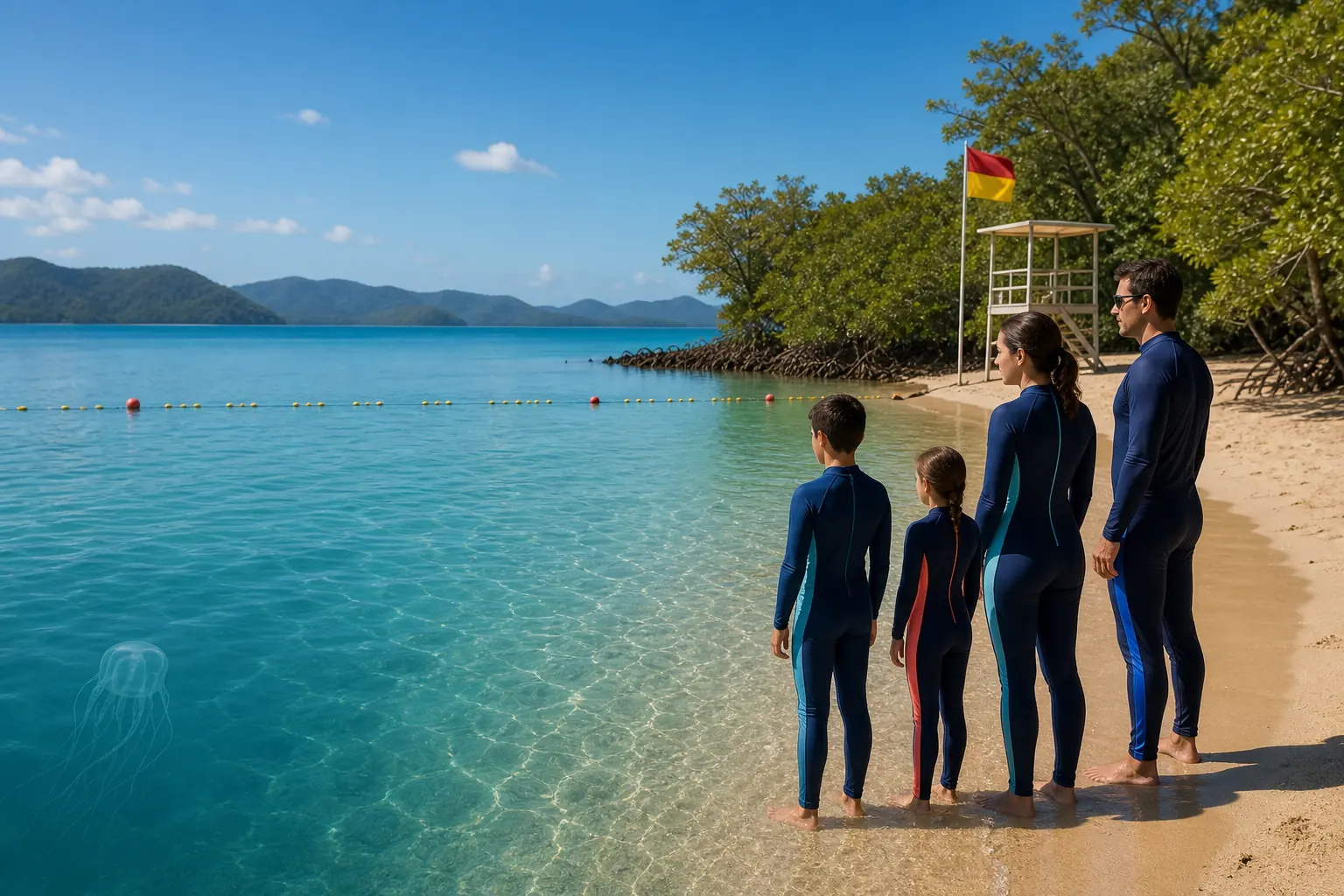
- Use a patrolled beach and swim between red-and-yellow flags.
- Obey closures and marine-stinger signs.
- Use a maintained stinger enclosure where provided; it is not 100% stinger-proof.
- Wear a full-body lycra suit or other recommended coverage.
- Ask the lifeguard about that day’s conditions.
Irukandji symptoms may be delayed
Severe back or abdominal pain, sweating, vomiting, agitation or cardiovascular symptoms can develop after an initially modest sting. Seek urgent medical care rather than waiting for a dramatic skin mark.
Queensland risk changes with latitude and habitat
Tropical and subtropical Queensland span a long coast. Government guidance emphasizes greater marine-stinger risk in tropical waters, generally north of Bundaberg, while warning that dangerous species may occur outside familiar boundaries. Estuaries, creek mouths, islands and open beaches do not share identical exposure.
Major box jellyfish and Irukandji-type risk
| Pattern | Possible presentation | Planning implication |
|---|---|---|
| Large Chironex-type contact | Immediate extreme pain and visible whip-like welts; rapid collapse after extensive contact | Emergency readiness and full coverage matter |
| Irukandji syndrome | Initially modest sting followed by delayed systemic illness | Do not rely on the skin mark or size of the animal |
Using a stinger enclosure responsibly
An enclosure reduces risk when it is correctly designed, installed and maintained for local conditions. It is not 100 percent stinger-proof. Small animals or fragments may pass some mesh, damage can occur, and an enclosure does not remove surf or other hazards. Read the sign and remain inside the managed area.
A family beach checklist
- Check today’s Queensland Government and lifeguard advice.
- Choose a patrolled beach and ask about marine stingers.
- Fit full-body suits before reaching the sand, including children.
- Locate the exit, phone, AED and first-aid station.
- Leave immediately if a closure or sighting is announced.
Frequently asked questions
Is November to May the only dangerous period?
No. It is a widely used higher-risk season, not a promise of zero risk outside it.
Are the Whitsundays and Far North Queensland identical?
No. Latitude, habitat, management and local observations differ. Use the authority responsible for the exact beach or tour location.
Official links
- Queensland Government: dangerous marine life
- WorkSafe Queensland: marine stingers
- ANZCOR Guideline 9.4.5
Independent clinical review is pending. Check live local alerts before entering the water.
Review and corrections
See an error or outdated source? Read our corrections process. Safety information is educational and does not replace local emergency services or clinical advice.