
Species profile · Last reviewed 22 August 2026
Copula sivickisi is a small box jellyfish known less for dangerous stings than for unusually elaborate reproduction. Adults show distinct sexes, courtship and direct transfer of sperm packages—behavior that looks surprising in an animal without a centralized brain.
What it looks like
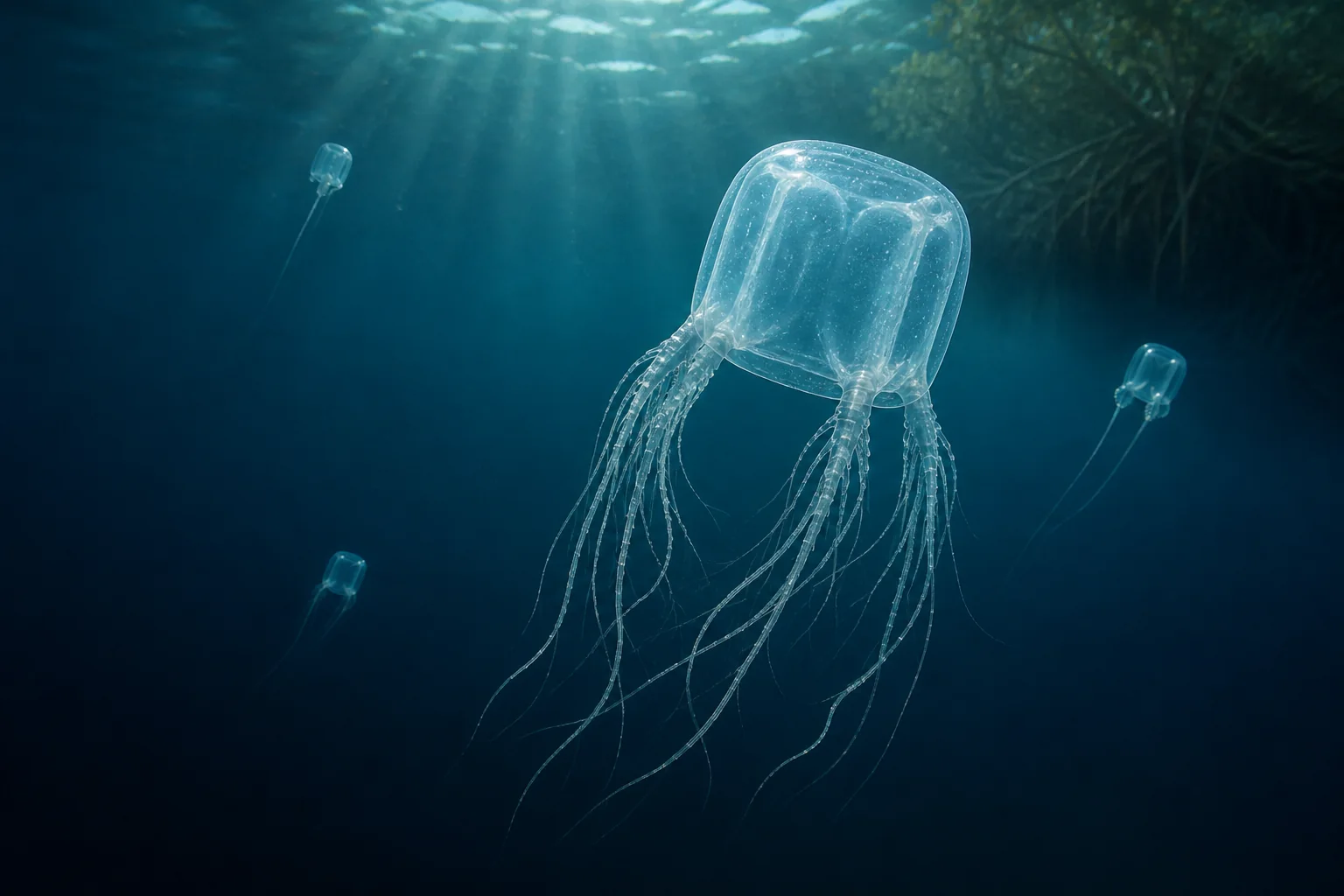
This is a small carybdeid with one tentacle at each bell corner. Members of Copula also possess adhesive pads at the top of the bell, used to attach to surfaces. Fine internal canal patterns help specialists distinguish species.
Courtship instead of broadcast spawning
A male and female interact physically, and the male transfers a sperm-containing package that the female takes up. That direct exchange differs from the mass release of eggs and sperm familiar from many marine animals. Describing it as “mating” is accurate; assigning human motives is not.
Taxonomy under revision
The name was long applied to records across several oceans. Comparison with the rediscovered type specimen and DNA work behind the 2024 description of Copula lucentia suggest that the genus contains more hidden species than previously recognized. Older distribution maps should therefore be read cautiously.
Human-risk context
C. sivickisi is not placed alongside the large lethal Chironex species in public-health guidance. It still has stinging cells and should not be handled. A sting response should be based on symptoms and local advice, not a tentative photograph.
Species snapshot
| Class | Cubozoa |
|---|---|
| Order | Carybdeida |
| Genus | Copula |
| Tentacles | One at each bell corner |
| Notable trait | Adhesive pads and direct sperm-package transfer |
Why direct sperm transfer is unusual
Many marine animals release eggs and sperm into the water, where fertilization depends on timing and concentration. In Copula, male and female interact and a sperm-containing package is transferred directly. This can improve contact between gametes while creating new behavioral demands for finding and recognizing a partner.
Attachment behavior
Adhesive pads near the top of the bell allow the animal to attach to surfaces. Attachment can conserve energy or support resting behavior, but it should not automatically be called sleep. The behavior also distinguishes the ecology of this small carybdeid from continuously swimming open-water species.
Distribution requires revision
Older records assigned the name across a very broad Indo-Pacific range. The rediscovery of type material and the description of Copula lucentia showed that canal anatomy and DNA can separate animals once grouped together. A modern range map should therefore distinguish verified current records from historical identifications awaiting review.
Identification limits
Bell size, transparency and one tentacle per corner are not sufficient for a confident species identification. Specialists examine adhesive pads, rhopaliar openings and internal canal patterns, ideally with DNA linked to a voucher.
Research questions
- How many lineages are hidden under older C. sivickisi records?
- How does courtship vary with light and habitat?
- Where do polyps settle, and how long do they persist?
- What prey supports adult populations?
- What is the evidence for medically significant human stings?
Sources
Review and corrections
See an error or outdated source? Read our corrections process. Safety information is educational and does not replace local emergency services or clinical advice.