
New species profile · Last reviewed 22 August 2026

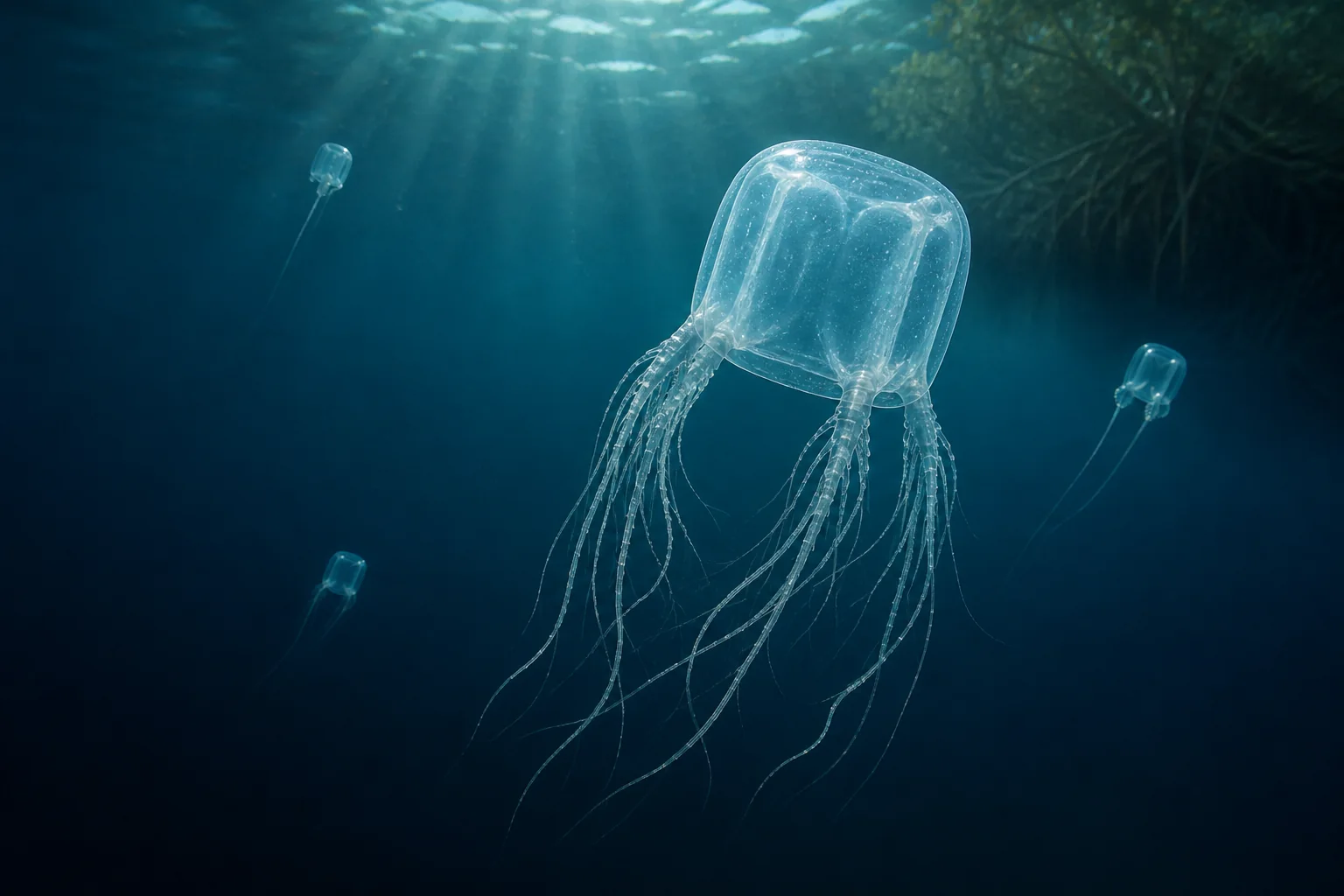
Copula lucentia is a box jellyfish formally described in 2024 from El Campello on Spain’s Mediterranean coast. The discovery was not made on a remote expedition. It came from re-examining animals in a heavily used sea where the cubozoan inventory had seemed settled.
How it was recognized
Researchers compared the Spanish specimens with the long-missing type specimen of Copula sivickisi, recovered after almost sixty years. Both share the genus’s adhesive pads and keyhole-shaped opening around the rhopalium, but their internal velarial canal patterns differ.
The “bird-beak” clue
In C. lucentia, the canal roots narrow toward the bell margin and carry one or two sharp, triangular canals. The describing team compared the outline to a bird’s beak. C. sivickisi has broader, rounded, multi-lobed canals described as paw-like.
DNA supported the anatomy
Mitochondrial and nuclear markers confirmed that the Mediterranean specimens were distinct. The same analysis suggested additional unrecognized diversity inside Copula. This is a useful case study in why a familiar shape and an old name are not the end of identification.
What is known about risk?
The formal description establishes the species; it does not support dramatic claims about lethality. Avoid handling any cubozoan, report unusual coastal observations to local marine scientists and seek medical help for severe or systemic symptoms after a sting.
Species snapshot
| Accepted name | Copula lucentia |
|---|---|
| Described | 2024 |
| Type locality | El Campello, Mediterranean Spain |
| Order | Carybdeida |
| Distinctive evidence | Velarial-canal anatomy supported by mitochondrial and nuclear DNA |
A discovery built from collections
The species illustrates why museum material matters. Researchers compared fresh Mediterranean animals with the rediscovered type specimen of Copula sivickisi. That historical reference allowed them to decide which features represented the older species and which supported a new one.
How to read the diagnostic characters
The “bird-beak” canal description is a specialist comparison, not a beachside field mark. Soft internal canals require careful preparation and microscopy. Adhesive pads and a keyhole-shaped rhopaliar opening help place the animal in Copula, while the canal pattern and DNA support species separation.
What the 2024 study established
- A formally named Mediterranean species with designated type material.
- Morphological differences from the recovered C. sivickisi type.
- Molecular separation using more than one marker.
- Evidence that additional hidden diversity may remain within the genus.
What remains unknown
The description does not by itself establish abundance, full seasonal distribution, diet, complete life cycle or medical importance. Those questions need repeated field sampling and clinical evidence. A new species is scientifically important without requiring a sensational danger claim.
Why the finding matters
A heavily visited coast can still contain overlooked biodiversity. Correct names improve monitoring and prevent sting evidence from one species being attached to another. Future observations should be linked to specimens, photographs and coordinates whenever safe collection by researchers is possible.
Sources
Review and corrections
See an error or outdated source? Read our corrections process. Safety information is educational and does not replace local emergency services or clinical advice.