
Species profile · Last reviewed 22 August 2026
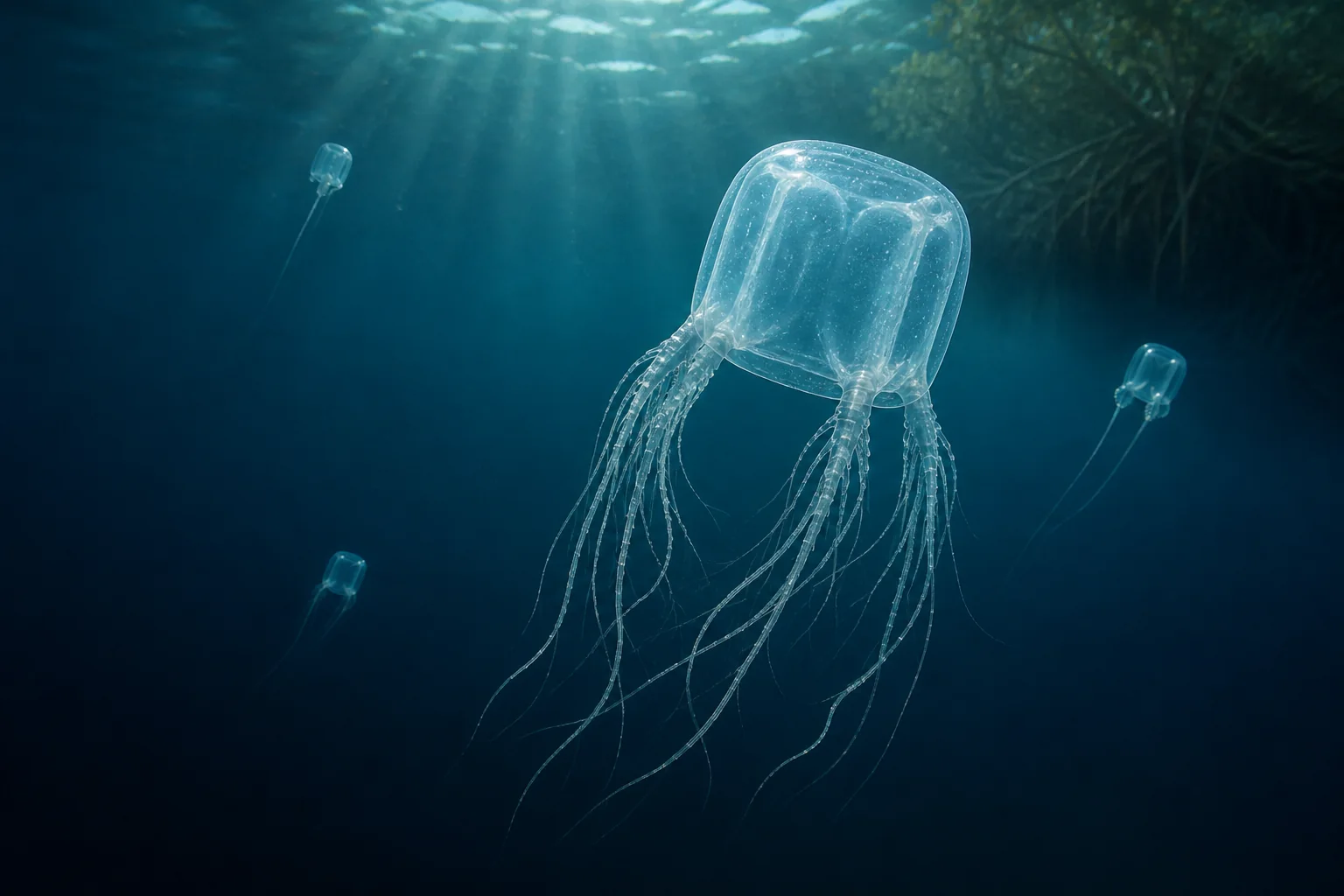
Carybdea marsupialis is a Mediterranean box jellyfish with one tentacle at each corner of its clear bell. It can be locally abundant near shore and cause painful stings, but its identity was historically stretched across records that later proved to belong to different species.
Identification
The bell is taller than wide and carries four pedalia, each with a single tentacle. Specialists examine stomach filaments, pedalial canals, velarial canals and juvenile stages. Those details separate the Mediterranean species from Caribbean animals now recognized as Carybdea xaymacana.
Where it is verified
Current taxonomic work supports C. marsupialis in the European Mediterranean, including the Adriatic. Older “worldwide” records can reflect outdated synonymy rather than a true global distribution.
Ecology near people
Adults may occur in shallow coastal water where swimming and fishing take place. Local abundance changes with place and season. Monitoring at a named beach is more useful than a broad regional generalization.
Sting context
Contact is painful and can produce skin inflammation. Severe reactions require urgent medical care, but this species should not be presented as medically identical to Chironex fleckeri. Follow the Mediterranean country’s health and rescue guidance.
A changing Mediterranean inventory
For years, C. marsupialis was treated as the only cubozoan confirmed in the western Mediterranean. The description of Copula lucentia from Spain in 2024 showed that even well-visited coasts can hold overlooked box jellyfish diversity.
Species snapshot
| Accepted name | Carybdea marsupialis |
|---|---|
| Class and order | Cubozoa, Carybdeida |
| Tentacles | One at each of four pedalia |
| Best-supported range | European Mediterranean, including Adriatic records |
| Human interaction | Painful local stings; severity should not be equated with Chironex fleckeri |
Why old “worldwide” records changed
Transparent carybdeids with one tentacle at each corner can look similar. Historical workers applied C. marsupialis broadly, including to Caribbean animals later recognized as Carybdea xaymacana. Modern revisions combine anatomy, development, locality and molecular evidence.
Identification features used by specialists
Useful characters include bell proportions, stomach filaments, pedalial canals, velarial canals and rhopaliar structures. Juveniles and preserved specimens may look different from fresh adults. Beach photographs rarely show all diagnostic traits, so locality and current taxonomic literature remain essential.
Near-shore ecology
Adults can occur in shallow coastal water used by swimmers and fishers. Local abundance may vary with season, prey, temperature, currents and observation effort. Monitoring a named beach over time is more informative than treating the entire Mediterranean as one population.
Sting context
Contact can produce immediate pain and skin inflammation. Severe, spreading or systemic symptoms need urgent medical care. Regional first aid should come from the relevant Mediterranean health or rescue authority, not from an Australian protocol copied solely because both animals are cubozoans.
Comparison with Copula lucentia
The 2024 description of C. lucentia expanded the known western Mediterranean cubozoan fauna. Copula has adhesive-pad and canal features that separate it from Carybdea. The discovery reinforces the need to preserve unusual animals for expert study rather than forcing every four-tentacled specimen into the familiar name.
Sources
Review and corrections
See an error or outdated source? Read our corrections process. Safety information is educational and does not replace local emergency services or clinical advice.