
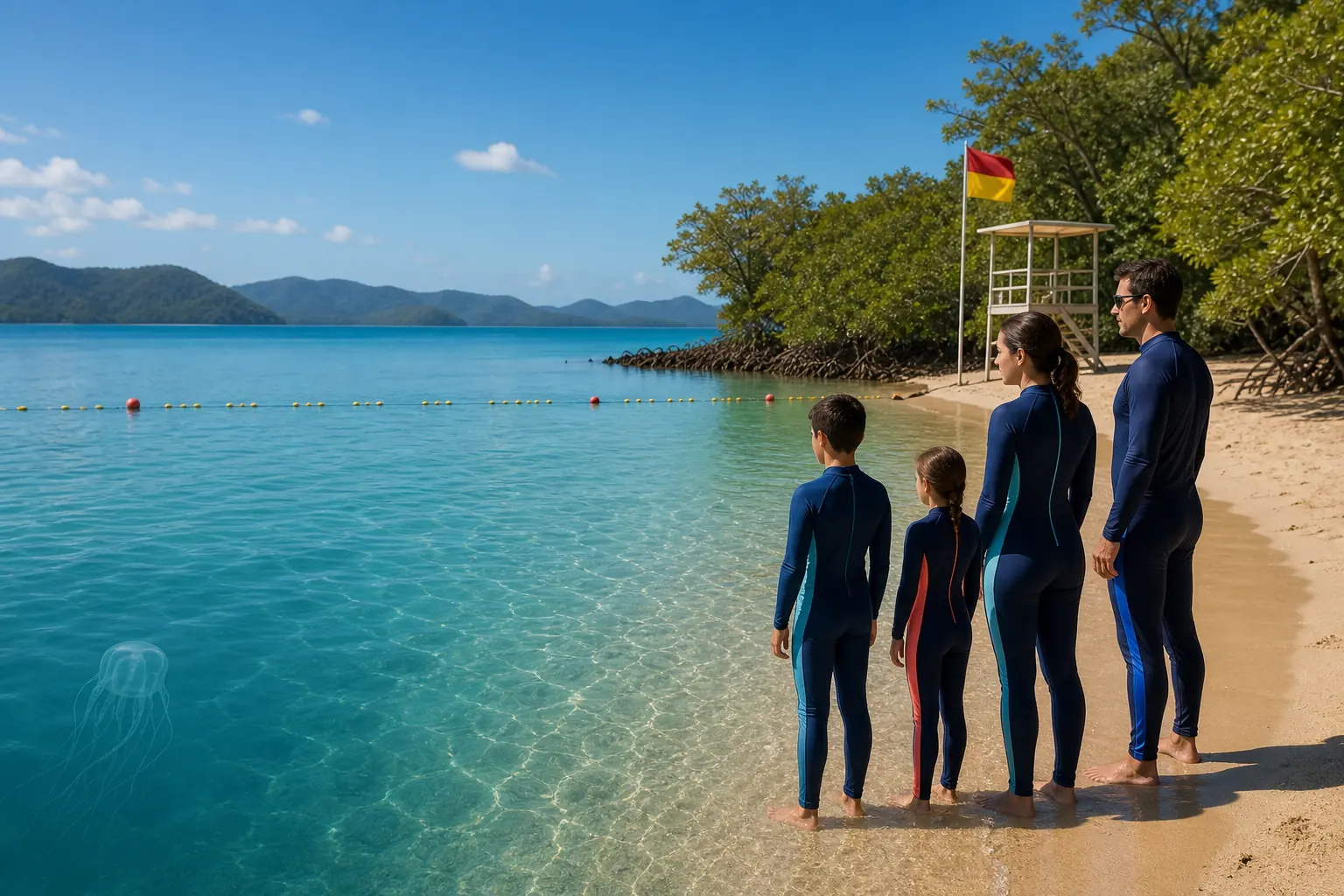
Protection FAQ · Last reviewed 22 August 2026

Intact, close-fitting fabric reduces direct tentacle contact and therefore reduces sting risk on covered skin. It is not an absolute shield. Gaps, torn or very open material, uncovered body parts and tentacles transferred while undressing can still produce a sting.
Why stinger suits help
Nematocysts discharge after physical and chemical cues at the surface. A continuous fabric layer keeps much of the tentacle off the skin. This is why Australian authorities recommend full-body lycra suits or wetsuits in tropical marine-stinger areas.
Common weak points
- ankles and wrists where fabric rides up;
- neck and zipper openings;
- hands, feet and face;
- holes, worn seams and loose folds;
- bare skin contacted while removing the garment.
What about ordinary T-shirts?
A shirt covers some skin, which is better than none, but it leaves large areas exposed and may shift in the water. “Clothing” is too broad a word for a guarantee; coverage, weave, condition and fit matter.
After suspected contact
Do not pull contaminated fabric across bare skin. Handle the emergency first, follow local tentacle-removal guidance and ask the responsible medical or marine authority about the garment. Severe or systemic symptoms require emergency services.
What counts as a useful barrier?
A useful garment covers the skin continuously, stays in place while swimming and has intact fabric and seams. Full-length stinger suits and wetsuits are recommended in some tropical marine-stinger settings because they reduce the area available for direct tentacle contact. No responsible authority describes them as permission to enter closed water.
Material, fit and coverage
| Factor | Better protection | Common failure |
|---|---|---|
| Coverage | Long sleeves, full legs and protected feet where advised | Bare wrists, ankles, neck, face and hands |
| Fit | Close enough to remain in position | Loose fabric riding up or folding |
| Condition | Intact weave, seams and zipper | Tears, worn panels and open zippers |
| Removal | Controlled handling away from bare skin | Dragging possible tentacle material across the body |
What the evidence does and does not show
The protective principle is mechanical: less direct tentacle-to-skin contact should reduce nematocyst exposure on covered areas. Evidence does not justify a universal percentage reduction for every fabric, species and swimming condition. Product claims such as “sting proof” require specific independent testing.
After a suspected sting
Treat the person before the clothing. Leave the water, call emergency services for severe or systemic symptoms and follow the local first-aid protocol. Do not pull contaminated fabric over the face or uncovered skin. Ask the responsible medical or marine authority how to handle the garment after a confirmed dangerous sting.
Frequently asked questions
Are leggings and a rash shirt enough?
They cover more skin than an ordinary swimsuit, but gaps at the waist, ankles, wrists and neck remain. Local authorities may recommend a purpose-designed full suit.
Can tentacles sting through a wetsuit?
An intact wetsuit is a substantial physical barrier on covered skin, but exposed areas, damaged material and transferred tentacles remain possible routes of contact.
Does sunscreen prevent stings?
Ordinary sunscreen is not a substitute for protective clothing, managed swimming areas or local warnings.
Sources
Independent clinical review is pending.
Review and corrections
See an error or outdated source? Read our corrections process. Safety information is educational and does not replace local emergency services or clinical advice.