
Gear guide · Last reviewed 22 August 2026

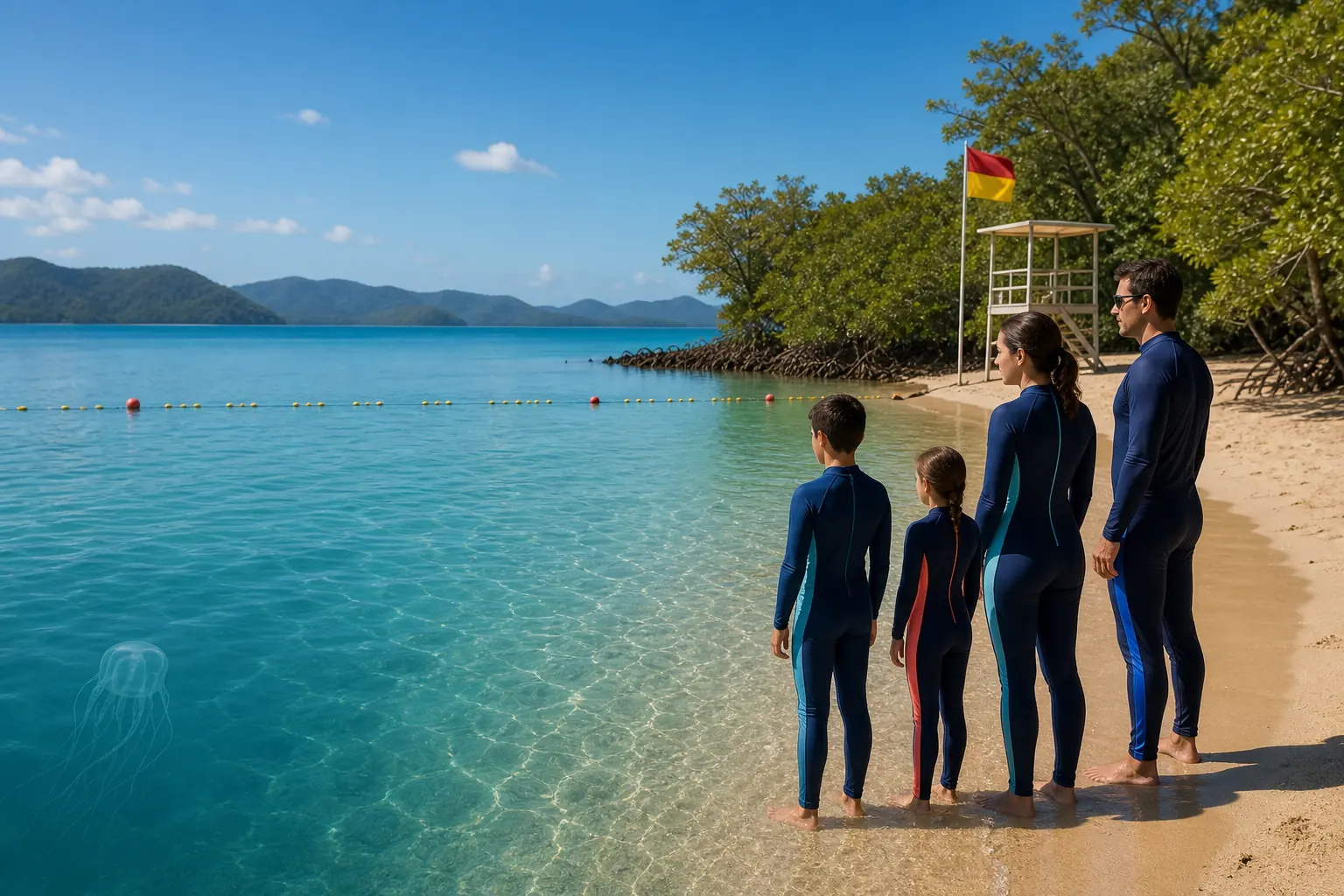
Yes—full-body stinger suits can reduce the chance that jellyfish tentacles contact covered skin. They are a physical barrier, not an invisible repellent and not permission to ignore a beach closure.

What a stinger suit actually does
Tentacle contact is a key trigger for nematocyst discharge. Covering the skin reduces direct contact, including across large body areas. This simple mechanical role is why Australian health and workplace-safety authorities recommend protective suits in marine-stinger risk areas.
Coverage matters more than the label
- Choose long sleeves and full-length legs.
- Check ankles, wrists, neck and zipper gaps.
- Use suitable footwear where advised.
- Make sure a child’s suit fits closely without restricting breathing or movement.
- Inspect fabric and seams for tears before entering the water.
Hands, feet and faces may remain exposed. A loose shirt and shorts leave far more skin available for tentacle contact.
Lycra suit or wetsuit?
Both can provide a contact barrier when they cover the skin. Lightweight stinger suits are comfortable in warm water; wetsuits add insulation but may be impractical in tropical heat. Neither choice changes a closure sign or replaces a local lifeguard’s instruction.
What suits do not guarantee
They do not cover every body part
Exposed skin can still be stung, and tentacle material may contact skin while the suit is being removed.
They do not make unpatrolled water safe
Currents, surf, crocodiles and other hazards remain. Use the designated swimming area and current advice.
They do not replace first-aid preparation
A group still needs a charged phone, emergency number and knowledge of the locally recommended response.
How to remove and rinse one safely
If a sting is suspected, follow emergency guidance before worrying about the garment. Avoid dragging possible tentacle material across bare skin. After ordinary use without a sting, rinse the suit according to its care label and allow it to dry fully. Do not treat washing advice as decontamination after a confirmed dangerous sting; ask the local medical or marine authority.
Buying checklist without the hype
Look for reliable coverage, close fit, durable seams, sun protection and a design the wearer can swim in comfortably. Be cautious with products promising “sting proof” performance against every species. No garment should be marketed as a substitute for closures and patrols.
Sources and review
- Healthdirect Australia
- WorkSafe Queensland: marine stingers
- Whitsunday Regional Council: marine-stinger FAQs
No product was supplied or paid for. Safety content is editorially source-checked; independent clinical review is pending.
Review and corrections
See an error or outdated source? Read our corrections process. Safety information is educational and does not replace local emergency services or clinical advice.