
Sighting checklist · Last reviewed 22 August 2026
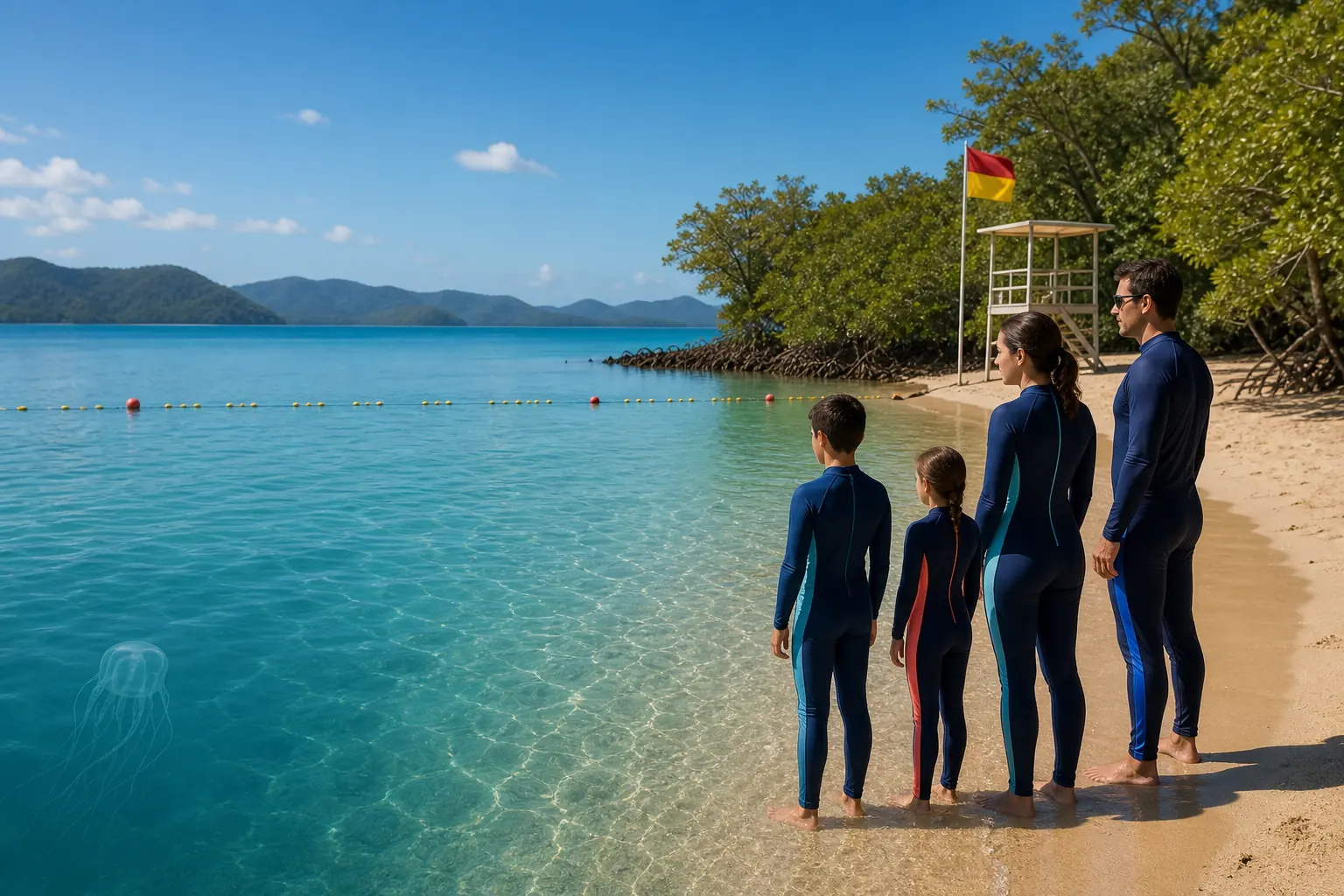
If you see a possible box jellyfish, leave the water calmly, warn people nearby and tell the lifeguard or local coastal authority. Do not catch it, push it back with bare skin or treat the sighting as a social-media identification contest.
In the first minute
- Move yourself and children out of the water.
- Point out the location without approaching the animal.
- Notify the lifeguard, ranger, resort or responsible local agency.
- Keep dogs and beachgoers away from stranded animals and tentacle pieces.
Record useful evidence
From a safe distance, take wide and close photographs if possible. Record time, precise place, whether it was swimming or stranded, approximate bell size and visible tentacle arrangement. Note tide and weather as context, not as a claimed cause.
Do not collect it yourself
A dead animal or detached tentacle can still sting. Scientific collection needs protective procedures, preservation supplies and a receiving institution. An undocumented specimen in a household jar is less useful than a geolocated photograph sent promptly to experts.
Does one sighting close a beach?
That decision belongs to trained local personnel who consider species, additional surveys, weather and public exposure. One sighting should trigger caution; no sighting should never be advertised as proof of absence.
If someone may have been stung
Move them out of the water, call emergency services for severe or systemic symptoms, begin CPR if required and follow local first-aid instructions. Identification comes after life-saving care.
A useful sighting record
| Record | Why it matters |
|---|---|
| Exact date and local time | Connects the observation with tide, warnings and monitoring |
| Coordinates or named beach | Prevents vague regional claims |
| Wide photograph | Shows habitat, scale and whether the animal was swimming or stranded |
| Closer photograph from safety | May show bell outline, pedalia and tentacle arrangement |
| Approximate size with method | Separates bell width from stretched tentacle length |
| Observer and reporting route | Allows experts to ask follow-up questions |
Photographing without creating risk
Use zoom from dry ground or behind a safe barrier. Do not wade closer, place an object beside the animal for scale or move tentacles into a better pose. A photograph is never worth another sting.
Who should receive the report?
Start with the lifeguard, park ranger, local government, fisheries agency or recognized museum or university program responsible for the coast. Social media can spread awareness but often removes location data and encourages premature species names. Submit the original file where possible because it contains more detail than a screenshot.
What not to conclude
- One animal does not establish a permanent population.
- No sighting does not prove absence.
- A transparent bell does not prove a medically dangerous species.
- Weather at the moment does not establish the cause of arrival.
- A beach-management decision belongs to the responsible authority.
If an animal is stranded
Keep children and dogs away. Mark the location only if that can be done without approaching tentacles, and alert the responsible staff. Do not bury, cut, rinse or place the animal in household waste unless the authority instructs you.
Printable mental checklist
Leave, warn, report, record. Leave the water; warn nearby people; report to the responsible authority; record safe evidence only after immediate safety is handled.
Sources
- Hawaii Ocean Safety: warning signs
- Queensland Government: dangerous marine life
- BFAR Philippines advisory
Independent clinical review is pending.
Review and corrections
See an error or outdated source? Read our corrections process. Safety information is educational and does not replace local emergency services or clinical advice.