
Regional safety guide · Last reviewed 22 August 2026
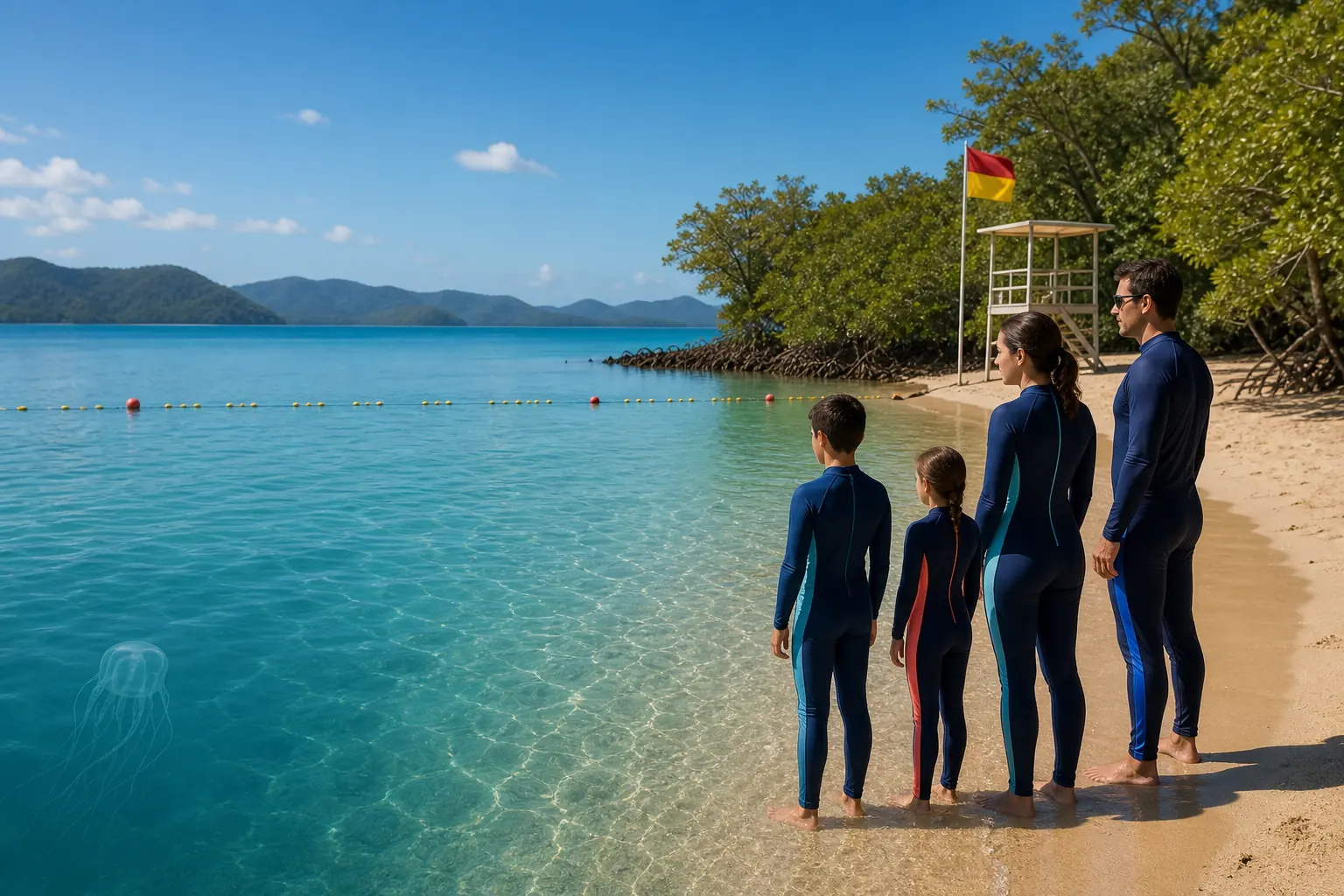
Dangerous box jellyfish have been documented in Thai waters on both the Gulf and Andaman sides. Incidents are uncommon relative to the number of visitors, but severe stings can progress quickly. Beach-level warnings matter more than a national yes-or-no answer.
Before entering the sea
- Read beach and hotel notices; ask a lifeguard or local operator about recent sightings.
- Use marked swimming zones and maintained enclosures where provided.
- Know the locations of vinegar poles or first-aid stations.
- Wear full-coverage protective clothing where local authorities advise it.
- Keep away from all stranded jellyfish and tentacle fragments.
Weather is not a universal predictor
Thai authorities may issue warnings during local rainy or monsoon conditions, but coastlines face different winds and seasons. A rule learned on Koh Samui should not automatically be applied to Phuket, and vice versa.
Do not confuse species
Portuguese man o’ war can also wash ashore during strong winds. It is a colonial siphonophore, not a box jellyfish. Obey the warning sign even if a social-media caption uses the wrong animal name.
Two coasts, different conditions
Thailand’s Gulf and Andaman coasts face different monsoon timing, wind exposure and local management. A warning issued for Koh Samui should not be copied automatically to Phuket, and an incident at one island does not describe every beach in the country.
What official Thai preparation looks like
- Read notices from the Department of Marine and Coastal Resources and local authorities.
- Ask the hotel, lifeguard or licensed operator about recent confirmed sightings.
- Use marked zones and maintained nets where provided.
- Locate vinegar poles, the exit route and a working phone before swimming.
- Know Thailand’s medical emergency number: 1669.
First-aid scope
Thai official materials advise vinegar for suspected toxic-jellyfish stings and warn against fresh water. Preserve life first: remove the person from the water, call 1669 and begin CPR if they are unresponsive and not breathing normally. Follow the dispatcher; do not delay resuscitation to search for a remedy.
Identification and reporting
| Observation | Useful action |
|---|---|
| Transparent bell with corner tentacles | Leave the water and alert beach staff; do not collect it |
| Blue-purple surface float | Possible man o’ war; obey the warning even though it is not a box jellyfish |
| Stranded tentacle fragments | Keep children and pets away; notify responsible staff |
Frequently asked questions
Is the rainy season the box-jellyfish season?
Some local warnings coincide with rainy or monsoon conditions, but no single weather rule covers both coasts and every species.
Can a hotel say the beach is completely safe?
No observation system proves absence. Prefer places with current monitoring, trained response and transparent advice rather than absolute guarantees.
Official sources
- Thailand Department of Marine and Coastal Resources: box jellyfish
- Thai toxic-jellyfish first-aid material
- Thailand Public Relations Department: current marine warning example
Independent clinical review is pending. Follow current Thai emergency and beach instructions.
Review and corrections
See an error or outdated source? Read our corrections process. Safety information is educational and does not replace local emergency services or clinical advice.