
Regional safety guide · Last reviewed 22 August 2026
Northern Territory authorities advise that major box jellyfish are more likely from 1 October to 1 June, while recorded stings have occurred in every month. NT guidance for Top End beaches is direct: coastal water also carries saltwater-crocodile risk, and swimming at beaches or estuaries is not advised.
Why the shallows matter
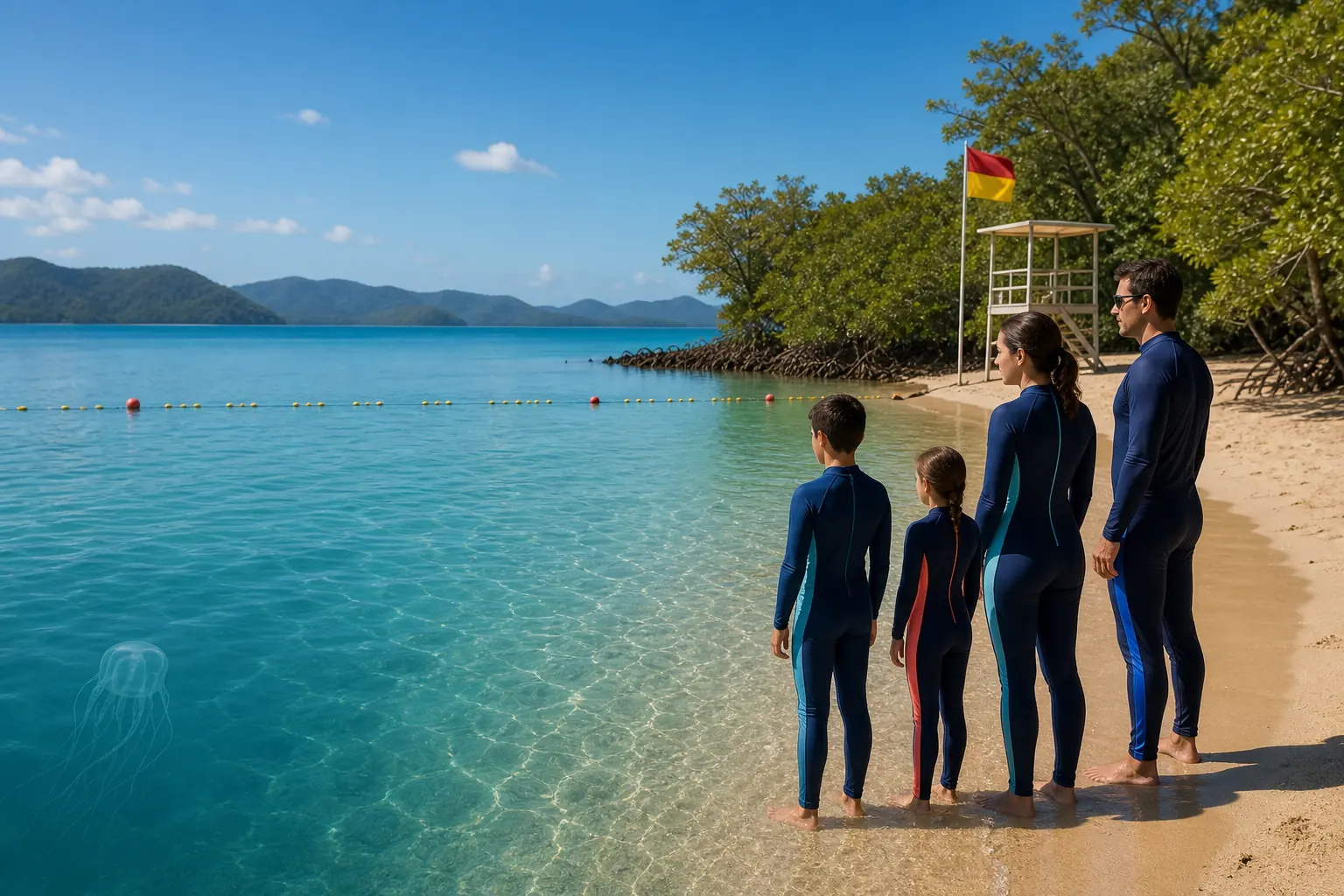
Chironex fleckeri inhabits shallow northern coastal water and can be more numerous after local rain and in calm conditions, particularly near river and creek outlets and boat ramps. Many serious incidents have occurred in water no deeper than a person can stand in.
Children face greater risk
The same tentacle exposure delivers a larger dose relative to a child’s body mass. NT Health reports that the Top End deaths recorded since 1975 were children. Close supervision is not enough if the swimming location itself is not recommended.
Safer choices
- Use managed swimming facilities such as the Darwin Waterfront rather than an unapproved beach.
- Read both stinger and Be Crocwise signs.
- Cover exposed skin when boating or wading is unavoidable.
- Carry vinegar where NT parks and boating guidance advises it.
- Never assume the dry season eliminates risk.
Top End geography and exposure
Darwin Harbour, open beaches, tidal creeks, boat ramps and remote park waters differ, but all require attention to both marine-stinger and saltwater-crocodile advice. The Northern Territory Government advises against treating ordinary beaches and estuaries as swimming places simply because the water looks calm.
Why serious stings occur in shallow water
Chironex fleckeri uses near-shore and estuarine habitats. A person does not need to be offshore or swimming beyond their depth to encounter tentacles. Shallow water can create a false sense of control, particularly for children.
Understanding the official season
| Statement | Correct interpretation |
|---|---|
| Main season: 1 October to 1 June | Higher-risk planning period used by NT authorities |
| Stings recorded in every month | Risk does not become zero in the dry season |
| More encounters after local rain or in calm conditions | Regional observation, not a universal daily forecast |
Safer alternatives and trip planning
Use facilities explicitly managed for swimming, such as controlled waterfront or pool environments, and confirm their current status. For boating and shoreline work, cover exposed skin, carry communications and follow NT advice about vinegar and first-aid equipment.
Frequently asked questions
Can children paddle at the edge?
The edge is not automatically safe. Serious incidents have occurred in shallow water, and a child receives a larger dose relative to body mass.
Does a stinger suit solve crocodile risk?
No. Marine-stinger protection and Be Crocwise guidance address different hazards; both must be followed.
Official links
- NT Government: box jellyfish
- NT Health: current box jellyfish situation
- NT Government: swimming in parks
Independent clinical review is pending. Official NT instructions take precedence.
Review and corrections
See an error or outdated source? Read our corrections process. Safety information is educational and does not replace local emergency services or clinical advice.