
Regional safety guide · Last reviewed 22 August 2026
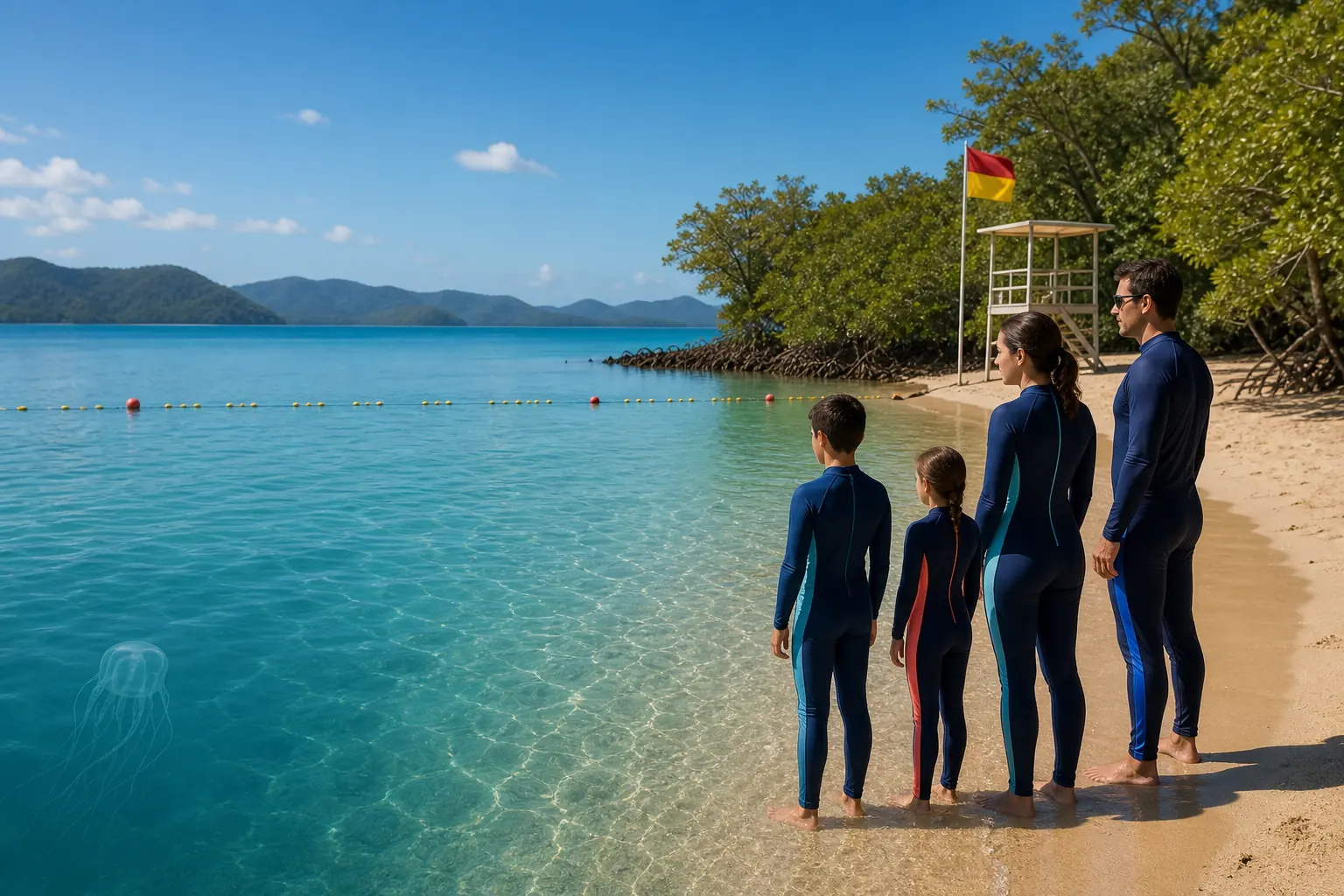
Northern Western Australia, including the Kimberley and waters around Broome, lies within Australia’s tropical marine-stinger region. Major box jellyfish and Irukandji-associated species are possible. Conditions differ sharply from Perth and the temperate south, so statewide shorthand is not useful.
Plan around place, not a generic calendar
Ask the local shire, ranger, tour operator or lifeguard about recent sightings and seasonal controls. In remote Kimberley locations, emergency response can take longer and saltwater crocodiles, tides and heat may be the more immediate reason a site is unsuitable.
Practical precautions
- Enter only areas explicitly managed or recommended for swimming.
- Read signs at boat ramps, beaches and park access points.
- Wear full-coverage protective clothing in tropical coastal water.
- Keep children out of unapproved shallows.
- Include communications and first-aid planning in remote trips.
First-aid scope
ANZCOR guidance covers suspected potentially lethal tropical jellyfish stings across Australia. Preserve life first: rescue without becoming a casualty, call 000 and start CPR when necessary. Consider vinegar as directed, remove tentacles and avoid fresh water on remaining marine tentacles.
Northern and southern Western Australia require different assumptions
The Kimberley and Pilbara lie in tropical or subtropical marine-stinger country. Perth and the temperate south have different species patterns and public-health context. “Western Australia” is too large for one month range or one beach rule.
Remote-water planning
In remote Kimberley settings, distance to care changes the consequence of a mistake. Before boating, wading or swimming, identify communications coverage, evacuation options, the nearest trained responder and whether the site is recommended for entering at all. Saltwater crocodiles, tides, heat and isolation may make a place unsuitable regardless of jellyfish.
| Before departure | At the site | If an incident occurs |
|---|---|---|
| Check shire, park and operator advice; carry reliable communications | Read signs, use approved areas, cover skin | Call 000, preserve life, follow dispatch and current Australian protocol |
| Plan for children and vulnerable swimmers | Keep away from creek outlets and unapproved shallows | Do not let the patient walk or drive if systemic illness is possible |
Season language needs local evidence
Tropical marine-stinger risk is commonly higher in warmer months, but exact timing varies by latitude, species and year. A calendar cannot account for a recent sighting, damaged enclosure or closure. Check the responsible shire, ranger, lifeguard or tour operator shortly before the activity.
Frequently asked questions
Is Broome risk the same as Perth?
No. The tropical north and temperate southwest differ substantially. Use location-specific advice.
Does a wetsuit make remote swimming safe?
No. Coverage reduces tentacle contact on protected skin but cannot manage crocodiles, tides, isolation or a closure.
Sources
Independent clinical review is pending. Check the responsible local authority before travel.
Review and corrections
See an error or outdated source? Read our corrections process. Safety information is educational and does not replace local emergency services or clinical advice.