
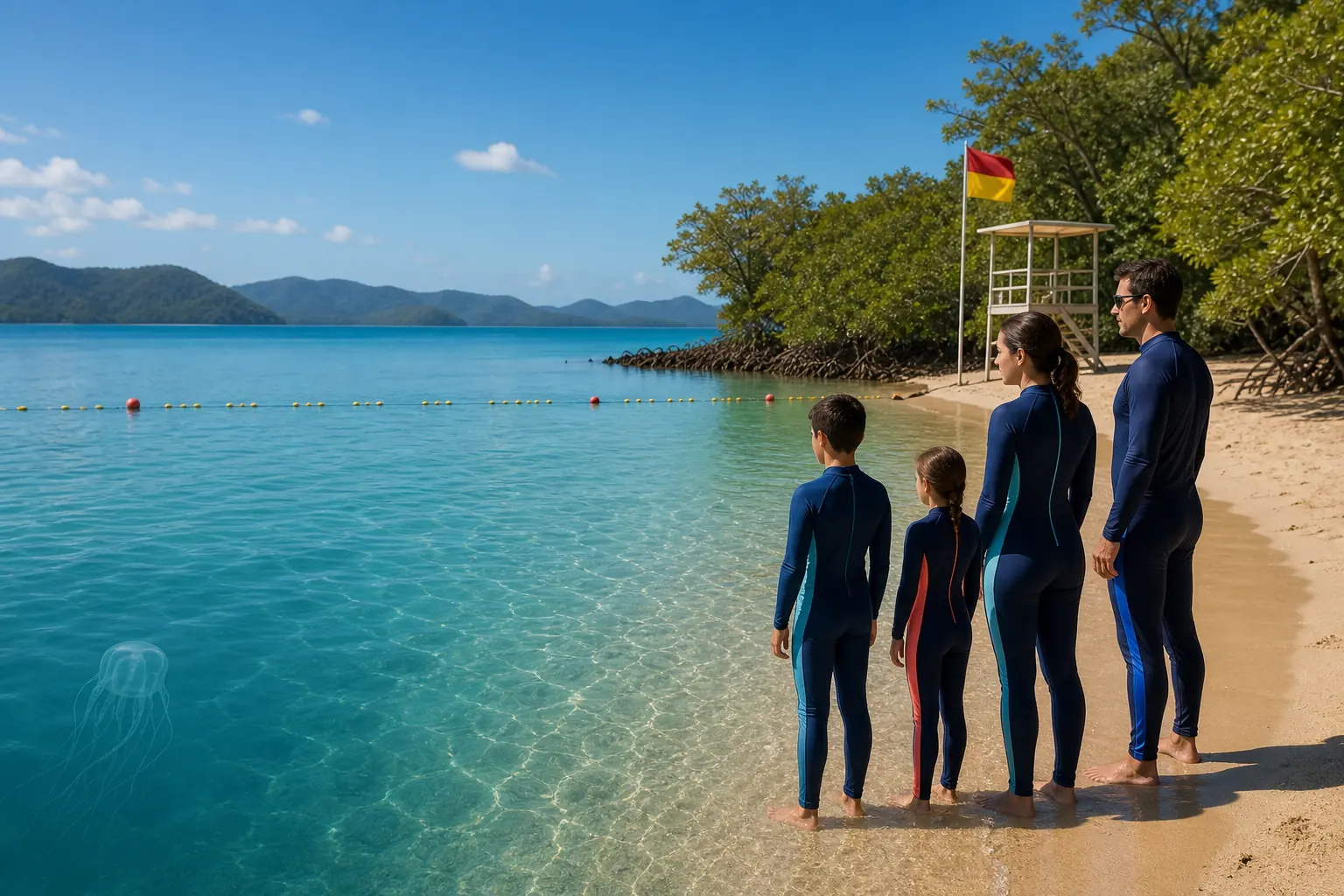
Irukandji syndrome is a pattern of delayed, severe whole-body illness following certain jellyfish stings. The sting site may look minor and the person may initially feel well. Then escalating pain, sweating, nausea, agitation or cardiovascular effects can develop. That mismatch is why “I can barely see a mark” is not reassuring.
Irukandji describes a syndrome, not one species
Carukia barnesi is the classic Irukandji jellyfish, but it is not the only one. ANZCOR Guideline 9.4.5 lists multiple small-to-medium cubozoan groups known or suspected to produce the syndrome, including species of Carukia, Carybdea, Malo, Alatina and Morbakka.
A clinical case often occurs without the animal being collected. “Irukandji syndrome” therefore describes the patient’s pattern of illness; it should not be treated as proof that one named species was present.
Symptoms and timing
| Stage | What may happen | Why it matters |
|---|---|---|
| Initial contact | The skin sting may be mild, localized or unnoticed; a small red flare or goose-pimple appearance may occur. | A modest mark does not rule out later systemic illness. |
| Delayed onset | Severe generalized, back, chest, abdominal or muscle pain; nausea, vomiting, sweating, restlessness, headache or a feeling of impending doom. | ANZCOR describes onset commonly within 5–40 minutes, typically 20–30 minutes. |
| Severe illness | Marked high blood pressure, rapid heart rate, breathing difficulty, heart failure or hypertensive complications. | Urgent monitoring and hospital treatment are required. |
Not every person experiences every symptom, and symptom intensity does not provide a reliable species identification. Call emergency services for escalating pain or systemic illness after tropical-water exposure.
First aid in Australia
- Remove the person from the water without creating another casualty.
- Call 000 and ask a lifeguard for help if present.
- Check responsiveness and breathing. Start CPR if the person is unresponsive and not breathing normally.
- For a suspected potentially lethal tropical jellyfish sting, current ANZCOR guidance says to consider liberally dousing the area with household vinegar for 30 seconds.
- Remove remaining tentacles. If vinegar is unavailable, remove tentacles and rinse with seawater—not fresh water.
- Keep the person still, remain with them and monitor for worsening symptoms.
- Expedite transfer to definitive medical care.
This is Australian guidance for potentially lethal tropical jellyfish. Protocols differ elsewhere. Follow the responsible local health authority and emergency dispatcher, and never let vinegar application delay CPR or transport.
What hospital care may involve
Clinicians assess breathing, heart rhythm, blood pressure, pain and neurological status. Care may include close monitoring, strong pain relief, anti-nausea treatment and management of cardiovascular complications. There is no safe online test that rules the syndrome in or out; water exposure, timing, symptoms and clinical observations guide the assessment.
Who may be at greater risk?
Any systemic illness requires emergency assessment. Children warrant particular caution because a similar venom exposure can represent a larger dose relative to body mass. People with cardiovascular disease, pregnancy or other major health conditions should identify those factors to emergency clinicians, but should not delay calling while gathering a medical history.
Can Irukandji syndrome be prevented?
- Check the current local marine-stinger warning, not only a generic season calendar.
- Use patrolled or explicitly managed swimming locations.
- Wear a correctly fitted full-body stinger suit where authorities recommend it.
- Remember that some small species may pass through an enclosure designed primarily for larger jellyfish.
- Know the emergency number and first-aid protocol before entering tropical coastal water.
Common questions
Can symptoms begin after leaving the beach?
Yes. Because onset is delayed, symptoms can develop after the person is out of the water. Escalating pain, sweating, vomiting, agitation, chest or breathing symptoms require an emergency call.
Does a small sting mark mean the case is mild?
No. The skin mark may be inconspicuous even when systemic illness develops.
Is every tiny box jellyfish an “Irukandji”?
No. The informal label refers to several syndrome-associated species, not every small cubozoan.
Can the jellyfish be identified from symptoms?
Symptoms can support a clinical syndrome diagnosis, but they rarely establish a species. A confirmed species record requires an animal and expert identification.
Sources and review
- ANZCOR Guideline 9.4.5
- Healthdirect Australia: jellyfish stings
- Australian Museum: Irukandji-associated jellyfish
Editorially source-checked: 22 August 2026. Independent clinical review: pending. This page does not replace emergency services or professional medical assessment.
Review and corrections
See an error or outdated source? Read our corrections process. Safety information is educational and does not replace local emergency services or clinical advice.