
Safety guide · Last reviewed 22 August 2026
No. Box jellyfish range from small, little-studied species to the large Chironex fleckeri, whose sting can become life-threatening within minutes. The important distinction is not “box-shaped equals deadly.” It is species, amount of tentacle contact, location, symptoms and the speed of emergency care.
Three very different risk patterns
| Pattern | What may happen | Examples |
|---|---|---|
| Rapid severe envenomation | Immediate extreme pain, extensive welts, breathing or cardiovascular collapse | Large multi-tentacled species such as Chironex fleckeri |
| Delayed systemic illness | The initial mark can appear modest; severe pain, sweating, agitation, nausea or cardiovascular effects may develop later | Several species associated with Irukandji syndrome |
| Local sting | Pain and skin irritation without severe systemic effects in most recorded cases | Various cubozoans, depending on species and exposure |
Why appearance is a poor danger test
Size can mislead. Some medically important Irukandji-type jellyfish have bells only a few centimetres across, while a conspicuous box jellyfish may cause a mainly local sting. Clear bodies are difficult to see and photographs rarely show the microscopic features needed for identification. Treat the symptoms and the local hazard advice—not a guess made from colour or size.
What changes the severity of a sting?
- Species and venom: cubozoan venoms are not interchangeable.
- Area of contact: more tentacle on skin can mean more venom delivery.
- Body size: children can receive a larger dose relative to body mass.
- Location: records and seasonal warnings differ among coasts.
- Time to rescue: removal from the water, resuscitation and urgent care can change the outcome.
When to seek urgent help
Call emergency services for collapse, breathing difficulty, altered consciousness, severe or spreading pain, vomiting, marked sweating, agitation, chest or back pain, or a suspected sting in a region known for dangerous tropical jellyfish. Delayed severe symptoms matter: Irukandji syndrome may not announce itself with dramatic skin marks.
Practical prevention
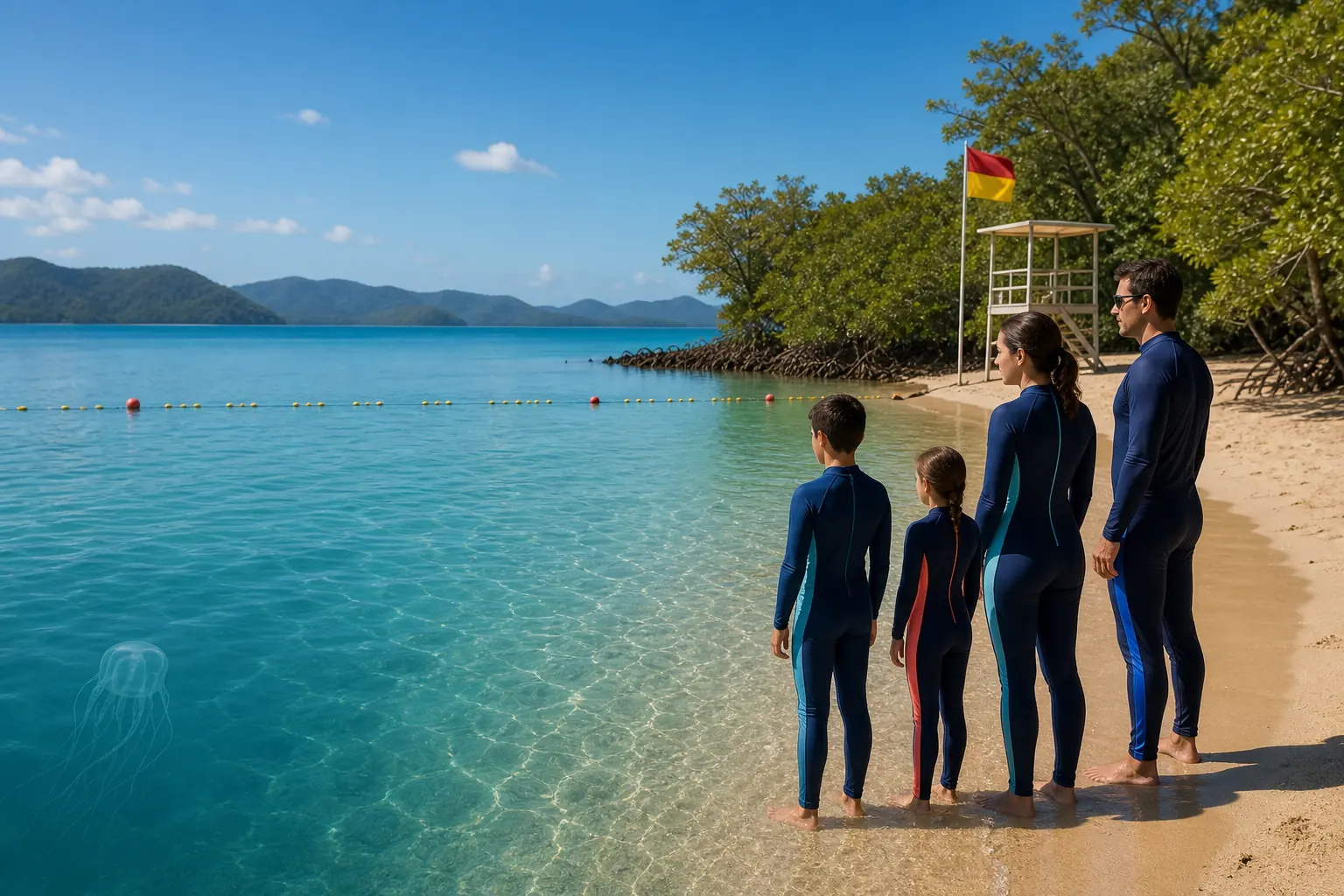
Check local marine-stinger alerts, use patrolled beaches and designated enclosures where provided, wear full-coverage protective clothing in risk areas and keep your hands off stranded animals. A dead or detached tentacle can retain unfired stinging cells.
For identification context, use the box jellyfish species directory. For an active sting, go directly to the sting symptoms and first-aid guide.
Sources and review
- ANZCOR Guideline 9.4.5
- Healthdirect Australia: jellyfish stings
- NOAA National Ocean Service: box jellyfish
Medical content is editorially source-checked; independent clinical review is pending. This page does not replace local emergency advice.
Review and corrections
See an error or outdated source? Read our corrections process. Safety information is educational and does not replace local emergency services or clinical advice.