
Species profile · Last reviewed 22 August 2026

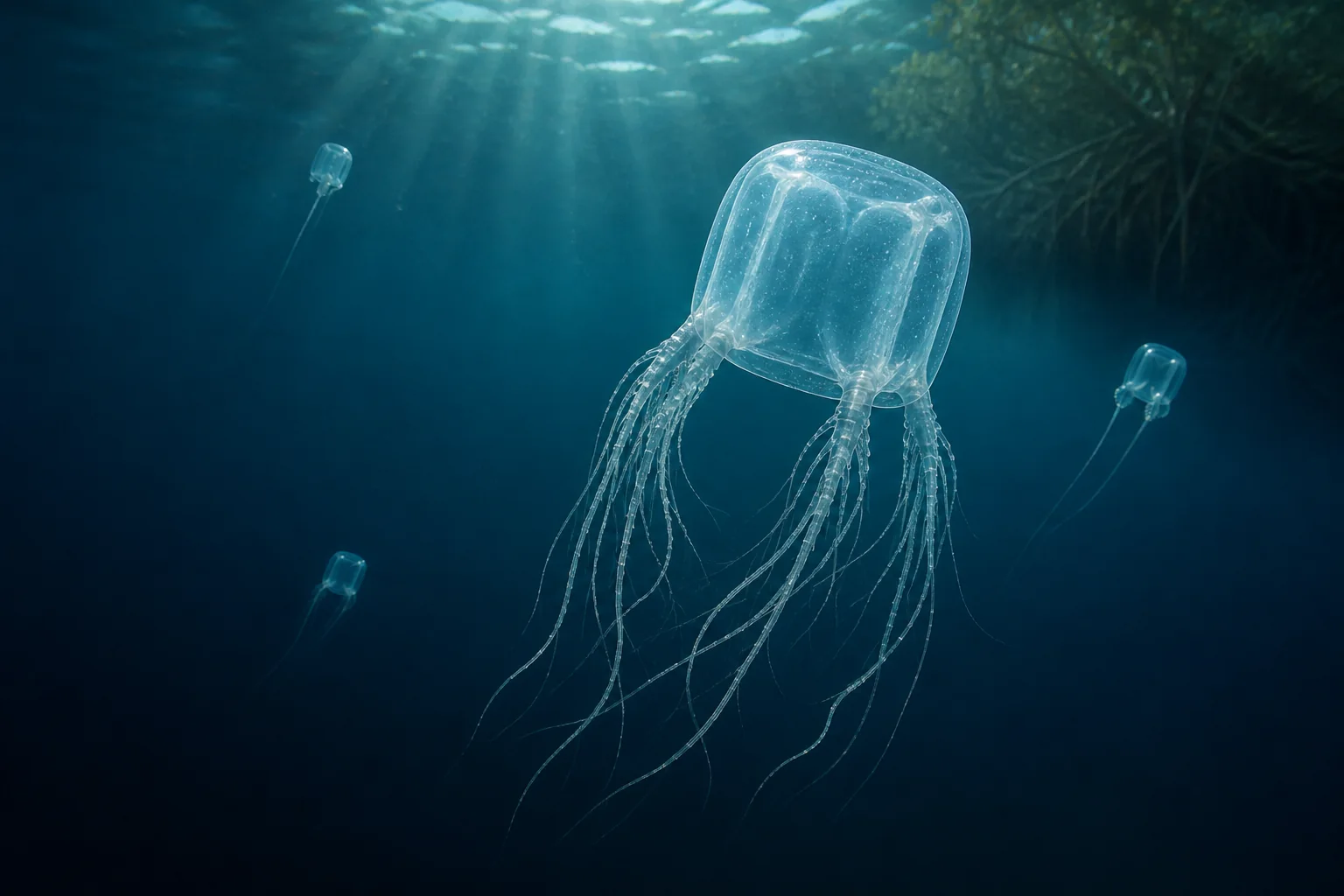
Chironex yamaguchii is a medically important multi-tentacled box jellyfish described from Japanese waters. Its history shows why names matter: animals once grouped under older labels have been re-examined with anatomy and DNA, revealing lineages that are not as uniform as they appear.
Identification
Like other Chironex, it has a robust, box-shaped bell and branching pedalia that carry multiple tentacles at each corner. Distinguishing it from close relatives is not a beachside task. Researchers compare fine anatomical characters and molecular sequences.
Documented range
The species is associated particularly with Japan’s Ryukyu region, including Okinawa. Reports elsewhere need to be checked against current taxonomy and voucher specimens. “Looks like Chironex” is useful for caution but not enough to extend a species range.
Human risk
This is not a harmless look-alike. Serious stings and fatalities have been associated with large multi-tentacled box jellyfish in the region. Beachgoers should follow Japanese local warnings and emergency guidance rather than importing an Australian seasonal calendar.
Why recent genetics matters
A 2025 genetic analysis reported substantial divergence among samples identified as C. yamaguchii. The cautious interpretation is not that every record is wrong, but that the current name may contain hidden diversity requiring broader sampling and taxonomic review.
Species snapshot
| Accepted name | Chironex yamaguchii |
|---|---|
| Order | Chirodropida |
| Core documented region | Japan’s Ryukyu Islands, including Okinawa |
| Body plan | Branching pedalia with multiple tentacles at each bell corner |
| Medical importance | Serious and fatal stings have been associated with large regional chirodropids |
Name and taxonomic history
Japanese animals now called C. yamaguchii were historically compared with or assigned to other Chironex names. Re-examination of anatomy established a distinct species, and recent genetic work suggests that samples carrying the name may still contain deeply separated lineages.
How specialists identify it
Multiple tentacles and a robust box-shaped bell indicate a chirodropid, but close relatives require examination of pedalial branching, internal structures and molecular sequences. A social-media photograph can justify caution without supporting a definitive range extension.
Human safety in Japan
Use current Japanese prefectural and beach guidance. Seasonal timing, warning systems and treatment practice should not be imported from northern Australia. After a severe suspected sting, leave the water, call Japan’s emergency number 119, begin CPR if the person is unresponsive and not breathing normally, and follow the dispatcher.
What recent genetics means
Deep sequence divergence is a reason to broaden sampling and compare anatomy—not permission to name species from a barcode alone. Researchers need specimens from across the range, authenticated reference material and multiple markers to decide whether the variation represents populations or undescribed taxa.
Research priorities
- Voucher-linked sampling throughout the western Pacific
- Japanese primary clinical and ecological data
- Polyp habitat and seasonal development
- Clear comparison with other Chironex species
Sources
- NOAA repository: genetic divergence in Chironex yamaguchii
- World Register of Marine Species
- NOAA National Ocean Service: box jellyfish
Medical content is editorially source-checked; independent clinical review is pending.
Review and corrections
See an error or outdated source? Read our corrections process. Safety information is educational and does not replace local emergency services or clinical advice.